
Compared with IVF alone and with Naturals, 12-week IVF + TEBx showed poorer results in terms of DNA methylation changes and differential gene expression in the placenta and whole embryo. These changes were reflected in alterations in placenta morphology and vascular density.
Compared to IVF and Naturals, 12-week IVF + TEBx offspring, regardless of gender, exhibited higher glucose, insulin, triglycerides, lower total cholesterol, and lower HDL.
Conclusion: Trophic Embryo Exfoliation (TEBx) affects the placenta and embryonic health during early development, with some changes resolving later in development and others worsening and triggering metabolic changes in the adult offspring.
Hum Reprod 2024 Jan 5;39(1):154-176.
Trophectoderm biopsy of blastocysts following IVF and embryo culture increases epigenetic dysregulation in a mouse model
trophectoderm biopsy (TEBx) impacts placental and embryonic health during early development, with some alterations resolving and others worsening later in development and triggering metabolic changes in adult offspring.
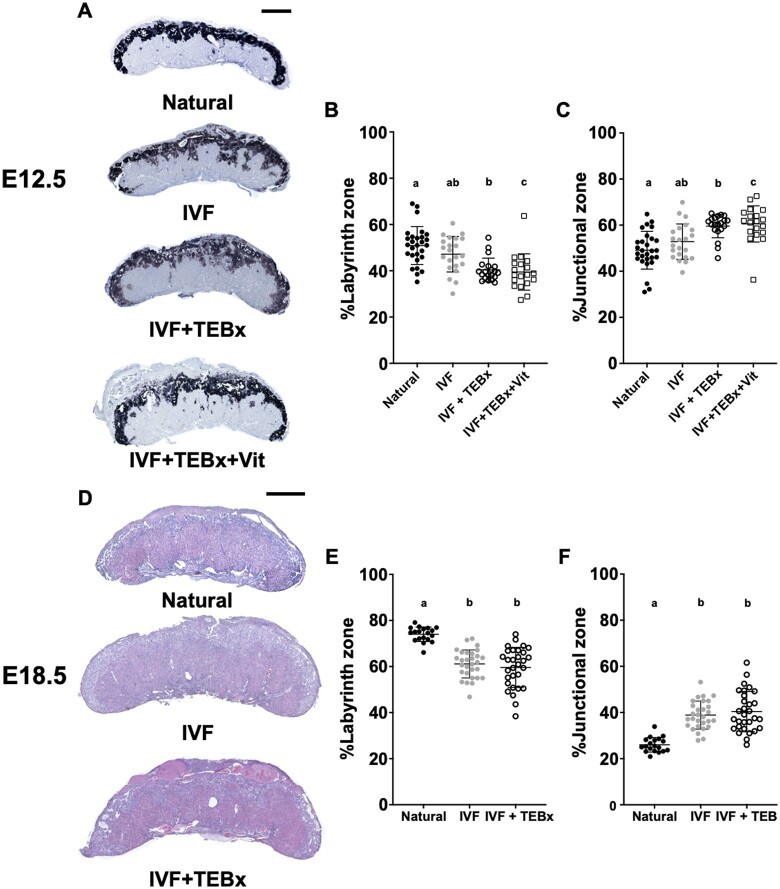
At E12.5, IVF + TEBx had a worse outcome in terms of changes in DNA methylation and differential gene expression in placentas and whole embryos compared with IVF alone and compared with Naturals. These changes were reflected in alterations in placental morphology and blood vessel density.
We observed that 12-week IVF + TEBx offspring, regardless of sex, showed higher glucose, insulin, triglycerides, lower total cholesterol, and lower higher glucose, insulin, triglycerides, lower total cholesterol, and lower high-density lipoprotein compared to IVF and Naturals.
Figure 3. Placental histology for embryonic day 12.5 and 18.5 mouse embryos. Placenta cross-sections at (A) Embryonic day (E) 12.5 using in situ hybridization with the junctional zone marker trophoblast specific protein alpha (Tpbpa), and counterstained with hematoxylin with the percentage of (B) labyrinth zone and (C) junctional zone shown. (D) E18.5 stained with hematoxylin-eosin and the percentage of (E) labyrinth zone and (F) junctional zone indicated. (E) labyrinth zone and (F) junctional zone indicated.
