
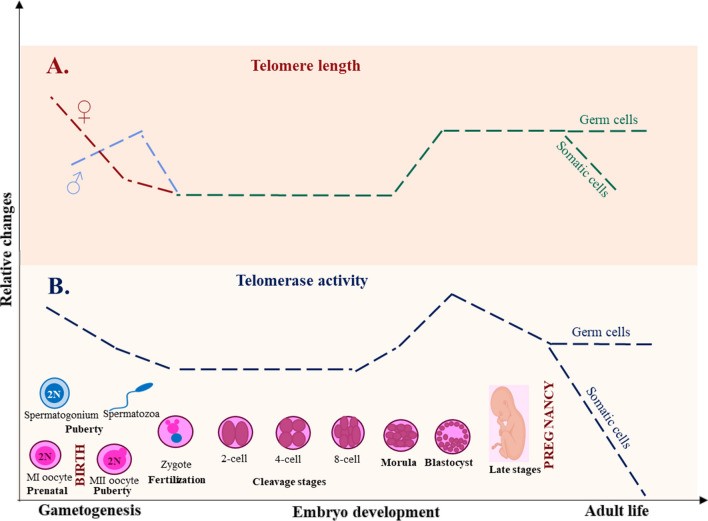
Association of telomere length & telomerase activity with IVF outcome in oocytes
Human oocyte TL is shortened during maturation
TL is a better predictor of post IVF outcome than other parameters
Cytoplasmic fragmentation-negative association in oocyte TL vs D3 pre-implantation embryos
TL length is associated with an aneuploid anomaly in humans.
aneuploid blastocysts have longer TL & lower TA
TL shortening is not associated with chromosome segregation errors in cleavage stage embryos
TA is a better predictor of pregnancy outcome after IVF treatment than TL
Oocyte TA Levels Predict Clinical Outcomes of IVF Therapy
Higher TA levels positively correlate with clinical IVF outcomes
Oocyte TL is associated with oocyte quality and embryo development.
There is no direct correlation between TL function and reproductive potential, and oxidative DNA damage adversely affects IVF outcomes and early markers of clinical pregnancy
TL abnormalities associated with ovarian insufficiency
Lower TA and shorter TL in oocytes associated with PCOS and longer infertility
TA and TL Have No Prognostic Value for Embryo Quality and IVF Outcomes in Patients with PCOS
Granulocyte TA is reduced in patients with ovarian insufficiency, and TL is shorter.
IVF Women's TL Significantly Shorter
https://www.ncbi.nlm.nih.gov/pmc/articles/PMC11224194/
Studies focused on the relation between telomere length/telomerase activity and oocytes
Human oocyte telomeres shorten during maturation
TL provided a better predictor of outcome following IVF than other parameters
Oocyte TL negatively predicted cytoplasmic fragmentation in D3 preimplantation embryos
Telomere DNA length was associated with human aneuploidy development
Aneuploid blastocysts have longer telomeres but lower TA when compared to either euploid or mosaic/segmental human blastocysts
Telomere shortening was not related to chromosome segregation errors in the cleavage stage embryo
TA is a better predictor of pregnancy outcomes following IVF treatment than TL
TA levels in luteinized GCs may predict the clinical outcomes of IVF treatment
Higher TA levels were positively correlated with clinical IVF outcomes.
TL in CCs is related to oocyte quality and embryo development
No direct association of telomere function and reproductive potential, while oxidative DNA damage adversely affect early markers of IVF outcome and clinical pregnancies No direct association of telomere function and reproductive potential
In young women, abnormal telomere homeostasis is linked to ovarian insufficiency
Lower TA and shorter TL in the GCs were linked with PCOS and a longer period of infertility
No prognostic value for the TA and TL in terms of embryo quality and IVF outcomes in PCOS patients
Shorter LTL and GCTL in women with ovarian insufficiency compared with healthy controls
- Diminished granular cell TA in patients with ovarian insufficiency compared with healthy controls
Women undergoing IVF had statistically significant shorter telomeres compared to healthy controls.
Evaluation of telomere length (TL) and telomerase activity (TA) on predicting in vitro fertilization treatment outcomes
